
It Was Never Just a Pool
Why the pool is the easiest part of your backyard
Almost every conversation starts the same way. Someone wants a pool. Or an outdoor kitchen. Or a pavilion with a fireplace and a TV.
Nobody calls us and says, "I'd like 88 tons of glacial boulder and a dry well."
Here is what we have learned building these projects: the pool is the easy part.
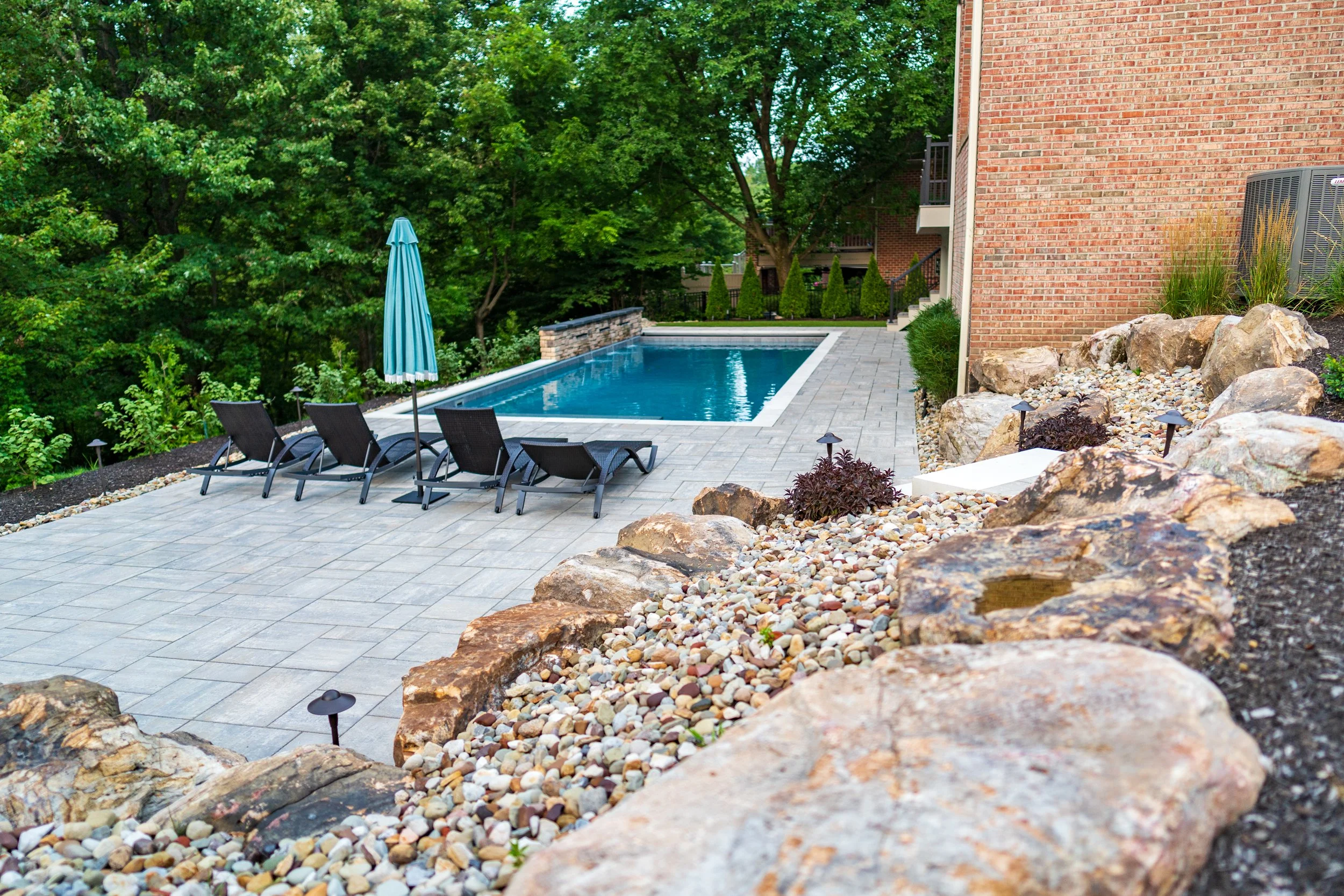
A pool is a fixed object. It goes where it goes; it is the size it is, and once it is in the ground, it is finished. Everything that decides whether you actually use it happens outside the water. Where you walk. Where you sit. How you get from the kitchen door to the deep end without crossing wet grass. What you look at from the tanning ledge. What your neighbors see when they look over the fence.
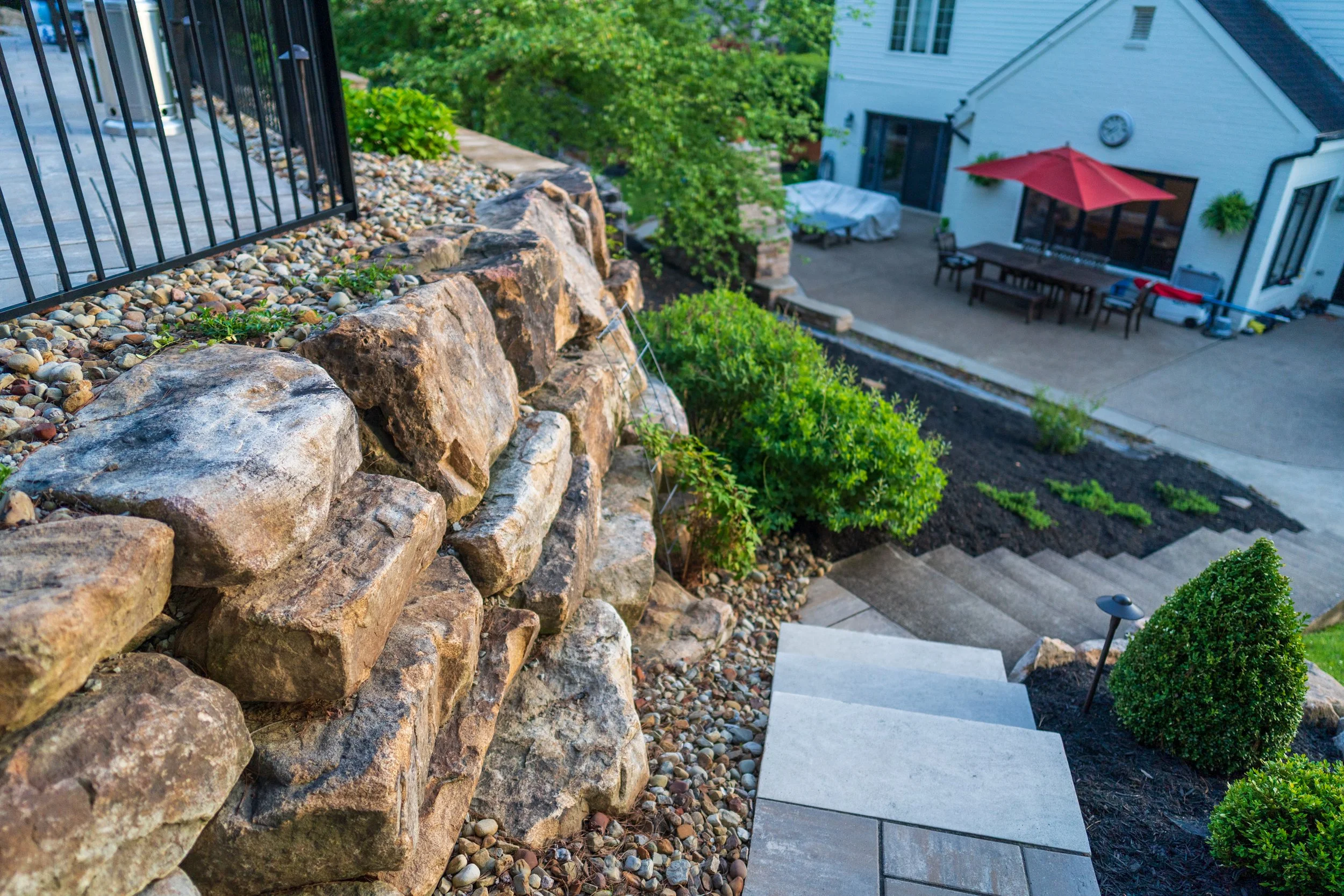
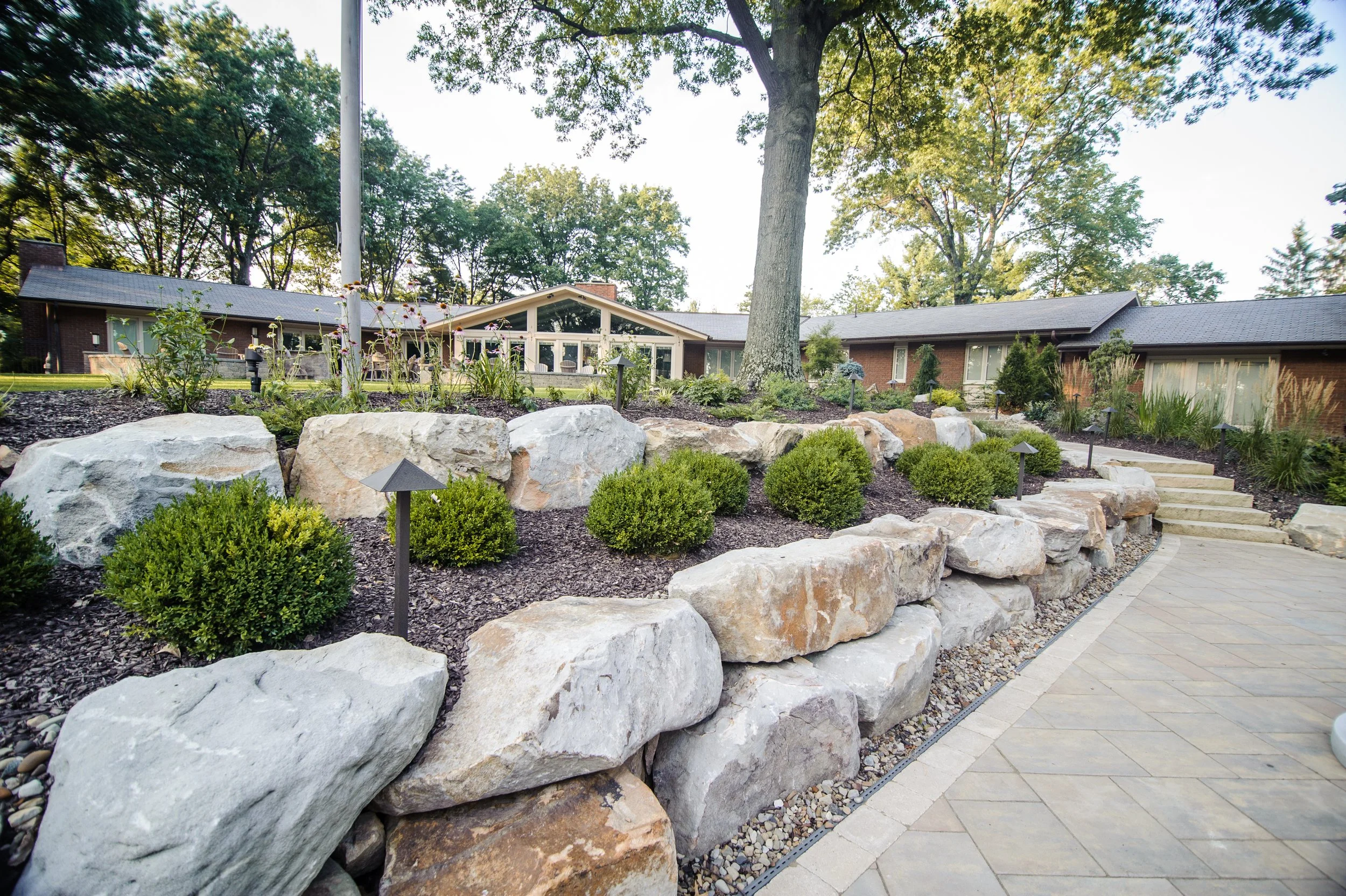
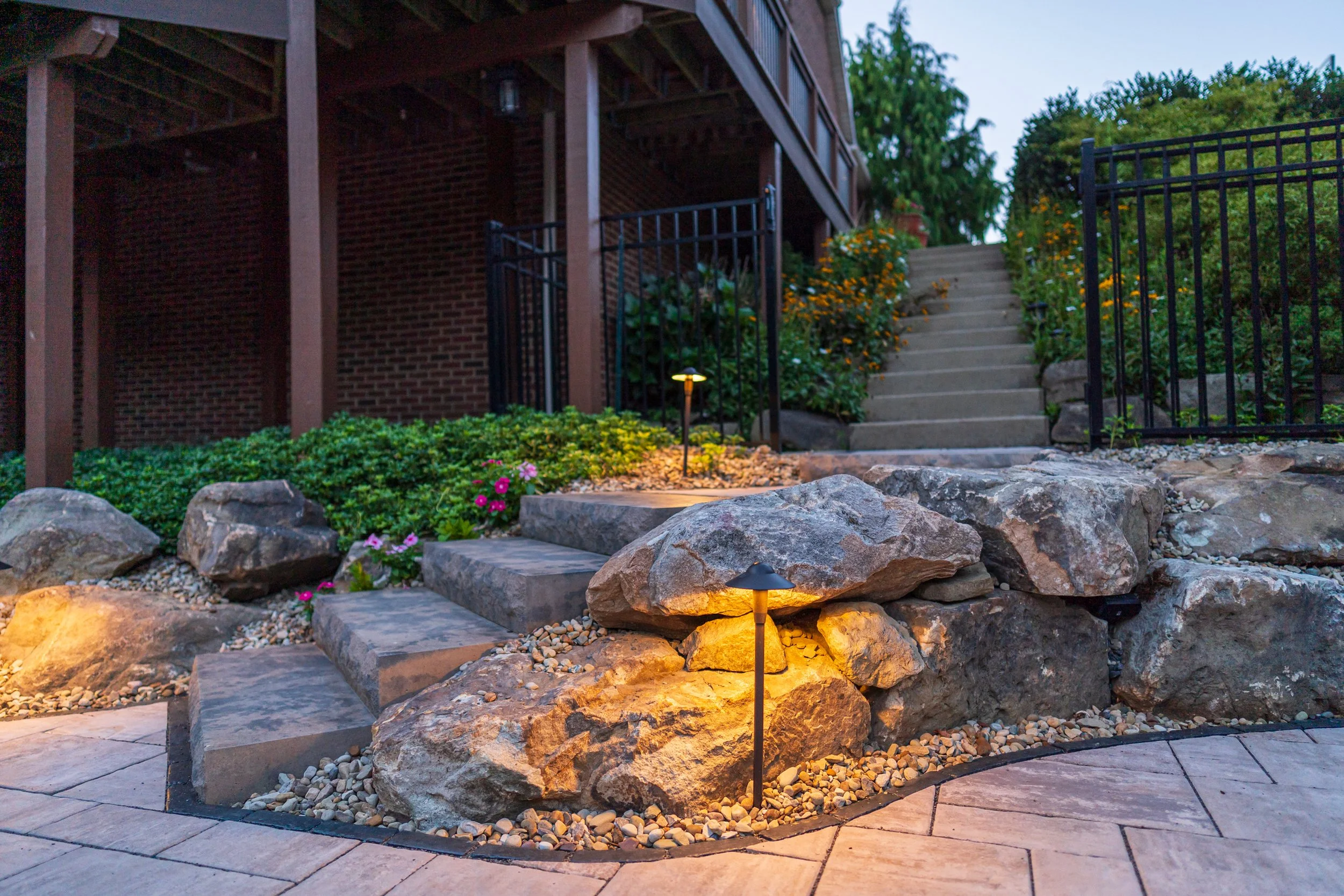
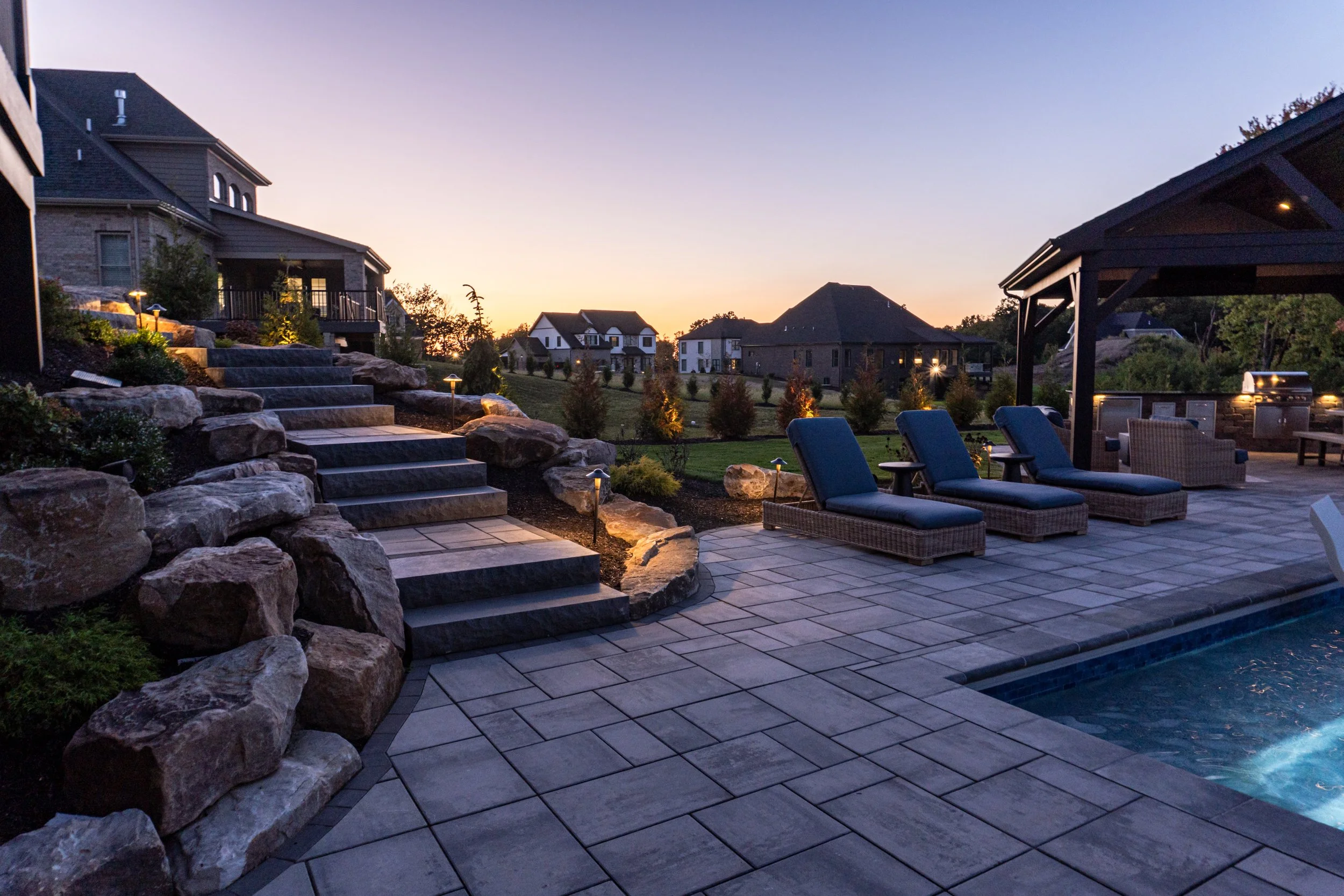
On one recent project, we set 253 tons of flat grey boulders into tiered walls, turning an unusable hillside into three levels of living space. The pool sat in the middle. Those boulders made the pool possible.
On another, 25 steps and a run of landings connect the driveway to the pool patio, because a backyard you cannot comfortably walk to is a backyard you use twice a summer.
On a third, we built a slide mound out of the soil we dug for the pool, lined it with glacial boulders, and set natural limestone treads into the climb.
None of those are pools. All of them are the reason those pools get used.
The part you never see
Here is the uncomfortable truth about outdoor living: the most expensive work is usually the work that disappears.
Before we set a single paver, we excavate 8 to 10 inches below the finished surface, lay geotextile on grade, compact 6 to 8 inches of 2A limestone, and screed a 1-inch sand setting bed. All of it to Concrete Masonry & Hardscapes Association (CMHA) standards. Then we cover it up. You will never look at it again.
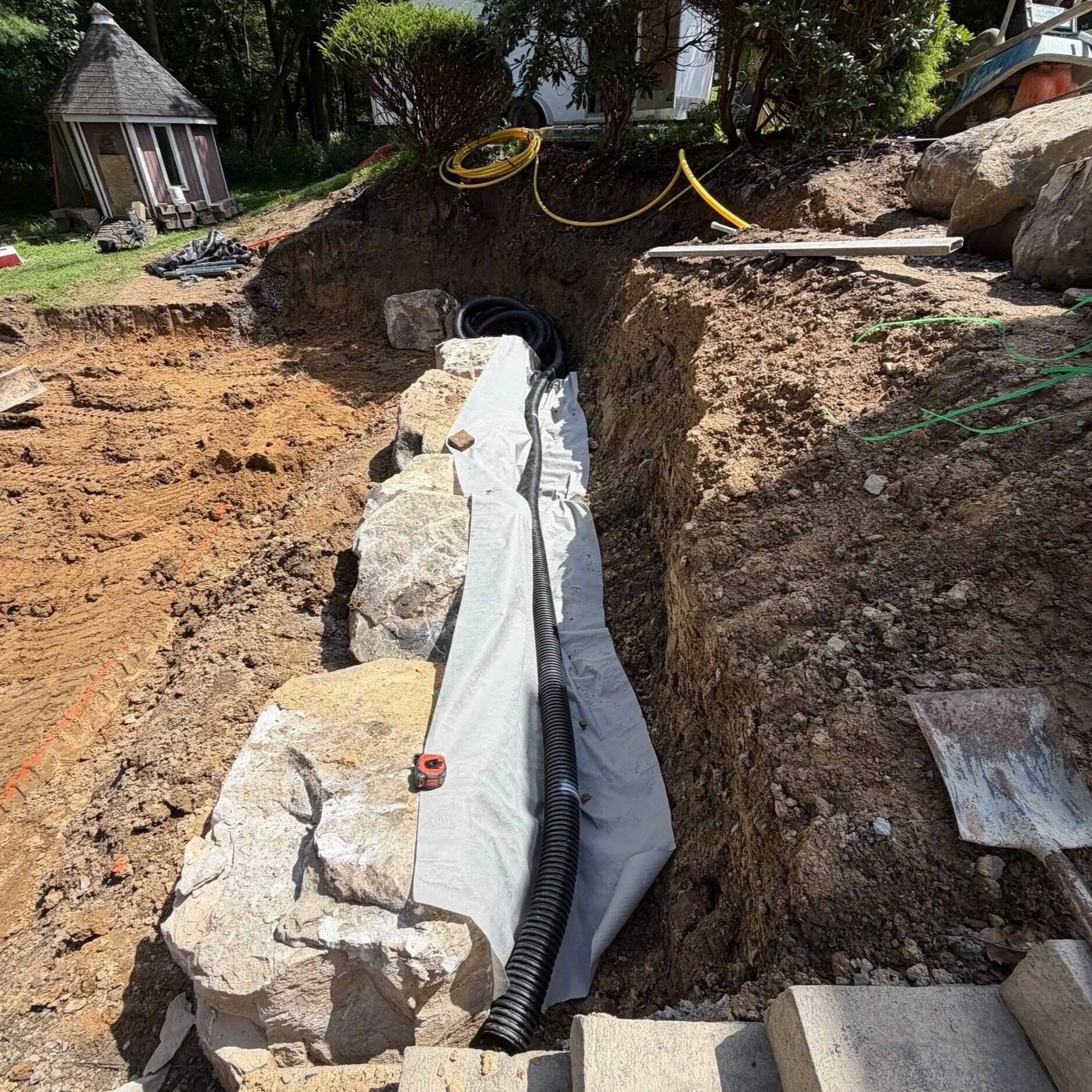
The same goes for drainage. Every project we build carries a drainage scope, and on most of them it is more involved than people expect: French drains, channel drains, dry well sumps, swales lined with river gravel, filter fabric, and standpipes.
None of it is visible. All of it is the difference between a patio that looks the same in year twelve and a patio that heaves, settles, and pushes water toward your foundation.
What the landscaping actually does
Plant work is what turns a construction site back into a yard.
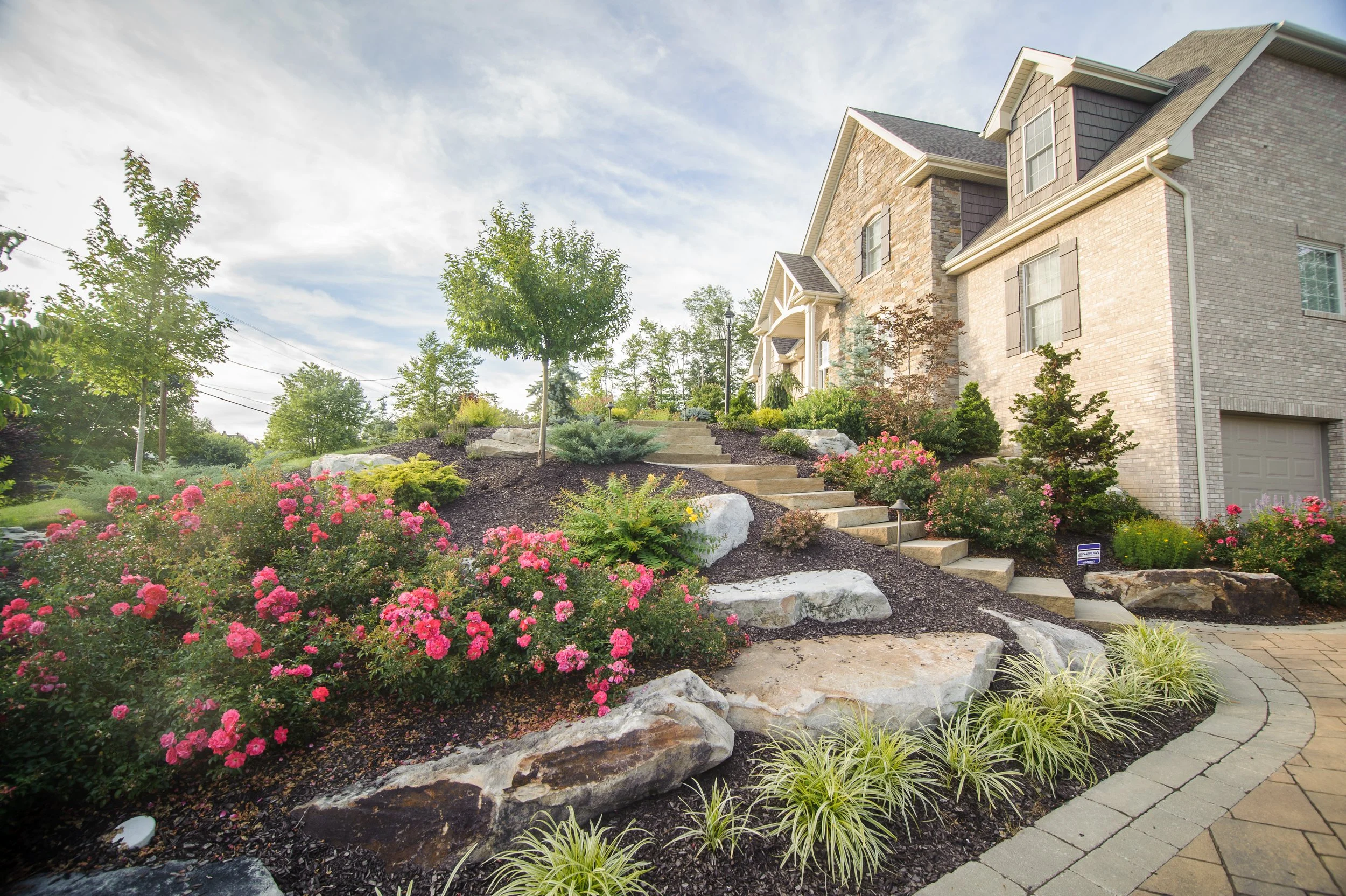
A typical landscape package on these projects included 20 to 54 tons of screened topsoil, 10 to 40 yards of shredded hardwood mulch, and anywhere from 22 to 253 tons of boulder. Plant lists ran 100 or more individual specimens: arborvitae, boxwood, hydrangea, Japanese maple, river birch clumps, ornamental grasses, summersweet, inkberry holly, blue atlas cedar, dwarf fountain grass.
Those lists are not decoration. They are doing four jobs at once.
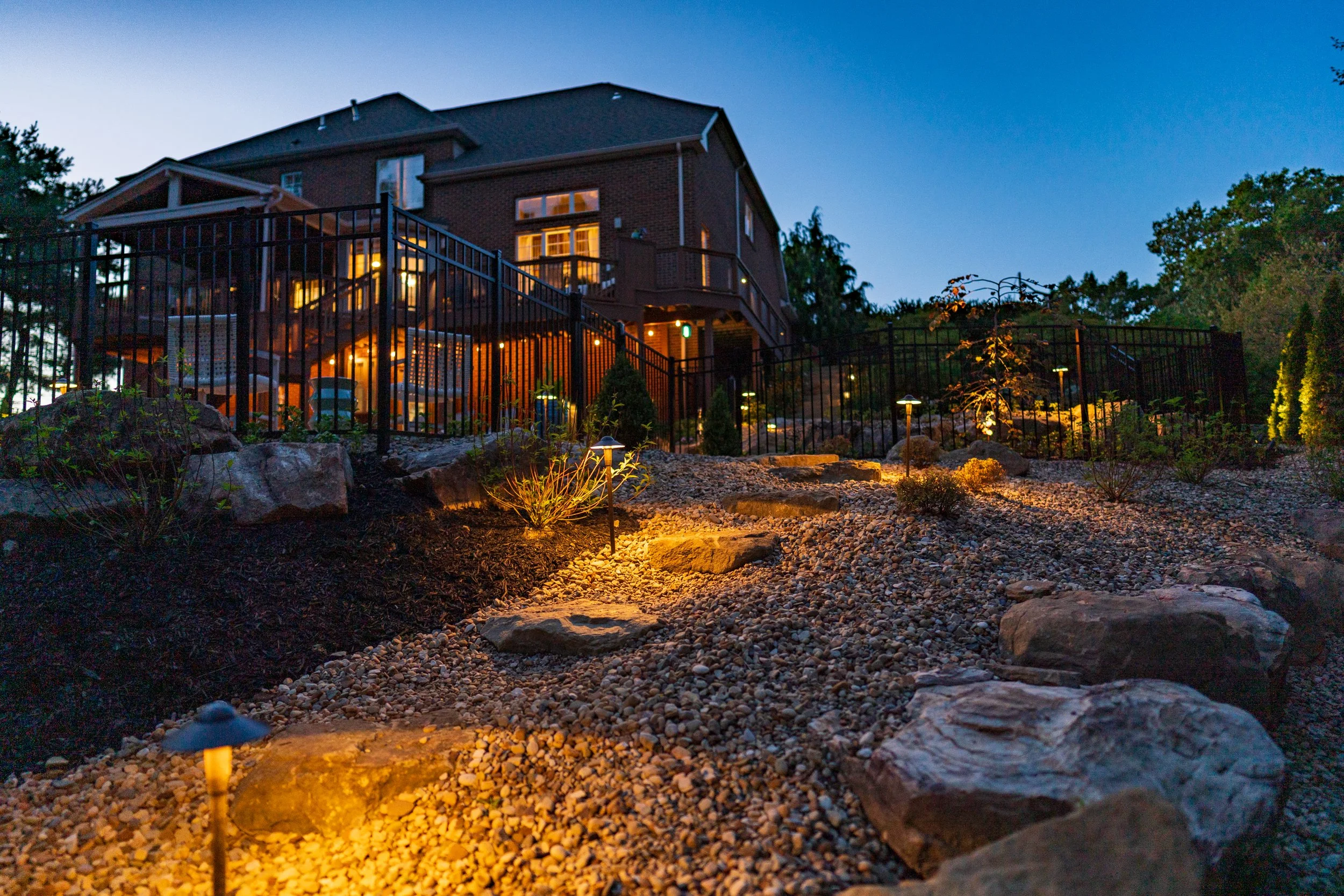
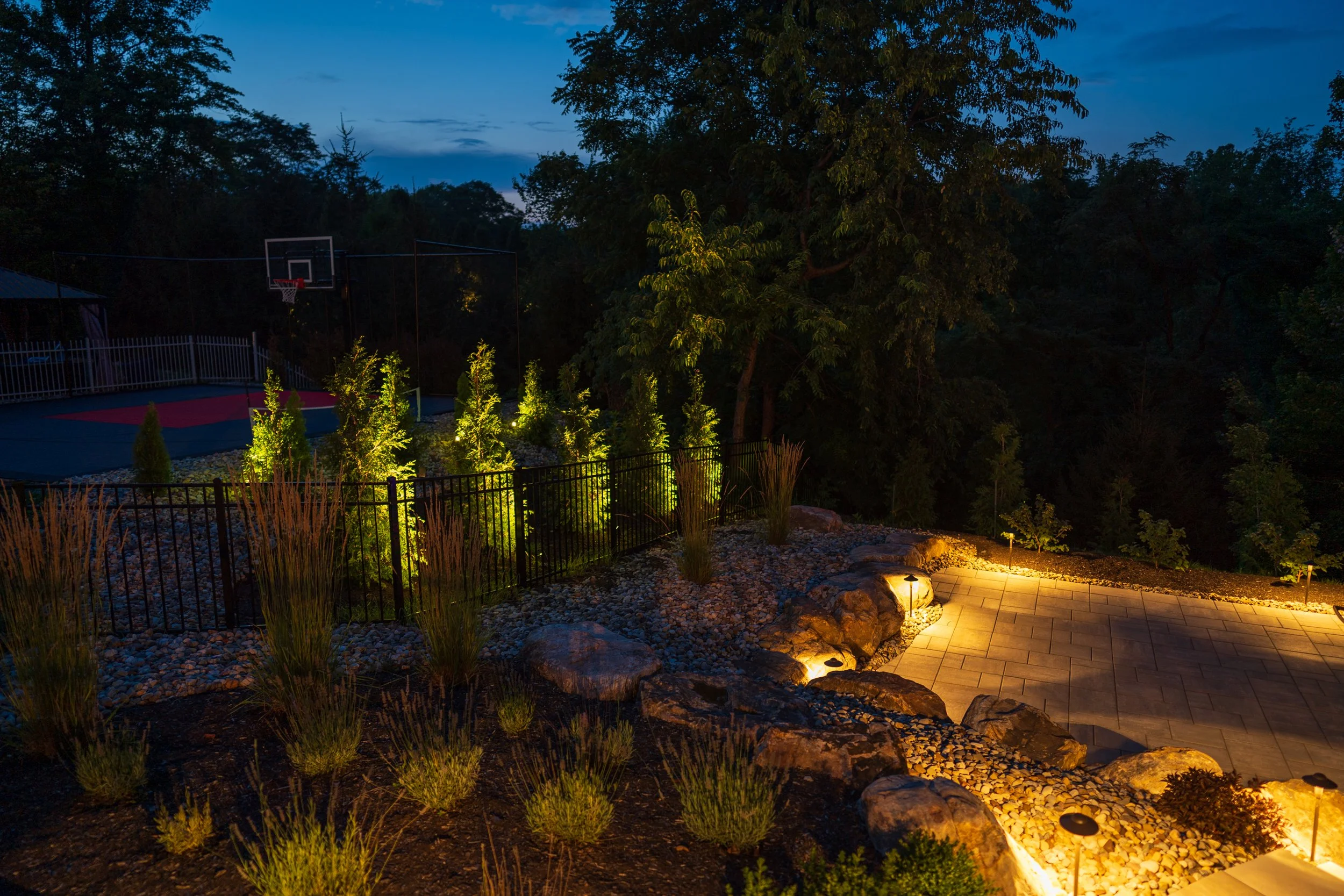
They hold the hill. Boulder tiers turn steep, wasted slopes into beautiful, terraced spaces for plants and paths.
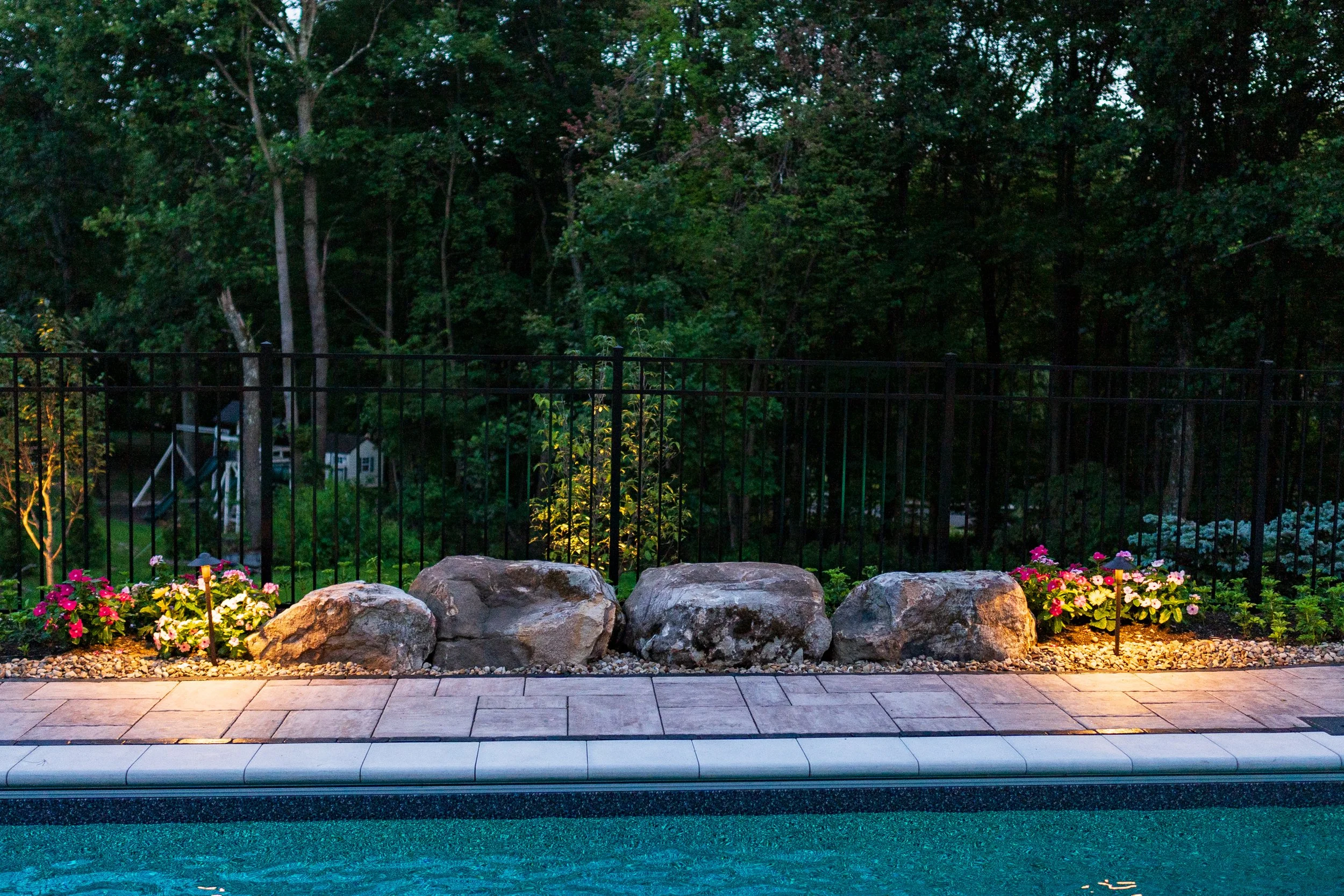
They solve the sightline. A pool with a nosey neighbor is a pool you enjoy a little less every time. Layered evergreen screening fixes that permanently, and it gets better every year instead of worse.
They reuse what we dig. Look closely at the excavation scope in almost any of our contracts, and you will find the same line: soils that can be staged and reused to shape beds and transition to surrounding topography stay on site. That is less hauling, fewer dump fees, and a finished grade that flows into your existing property instead of stopping at a hard edge.
They give you three more seasons. In Western Pennsylvania, a pool is useful from Memorial Day to Labor Day. You look at a layered landscape with structural evergreens, fall color, and winter interest even in February.
Lighting is the multiplier
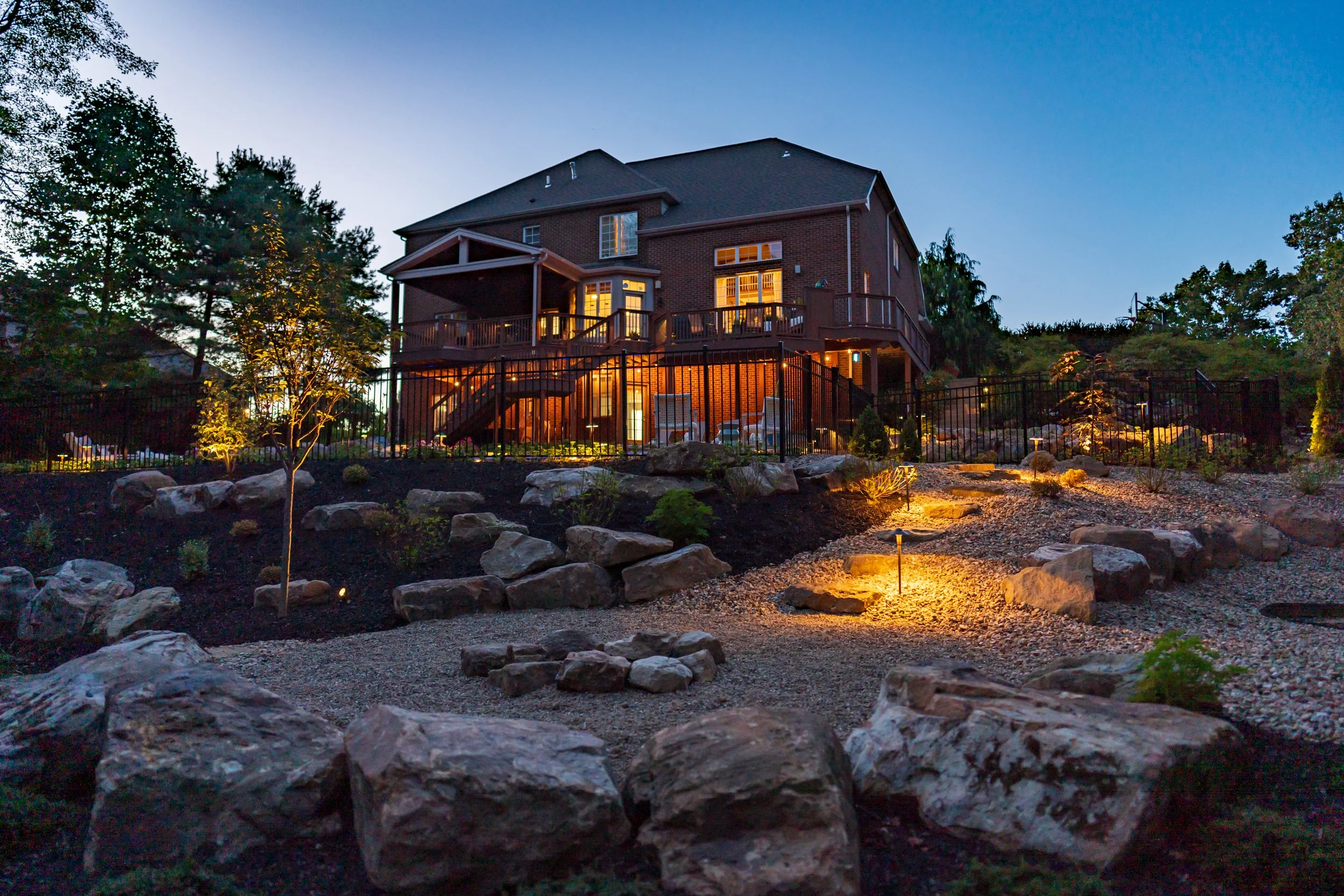
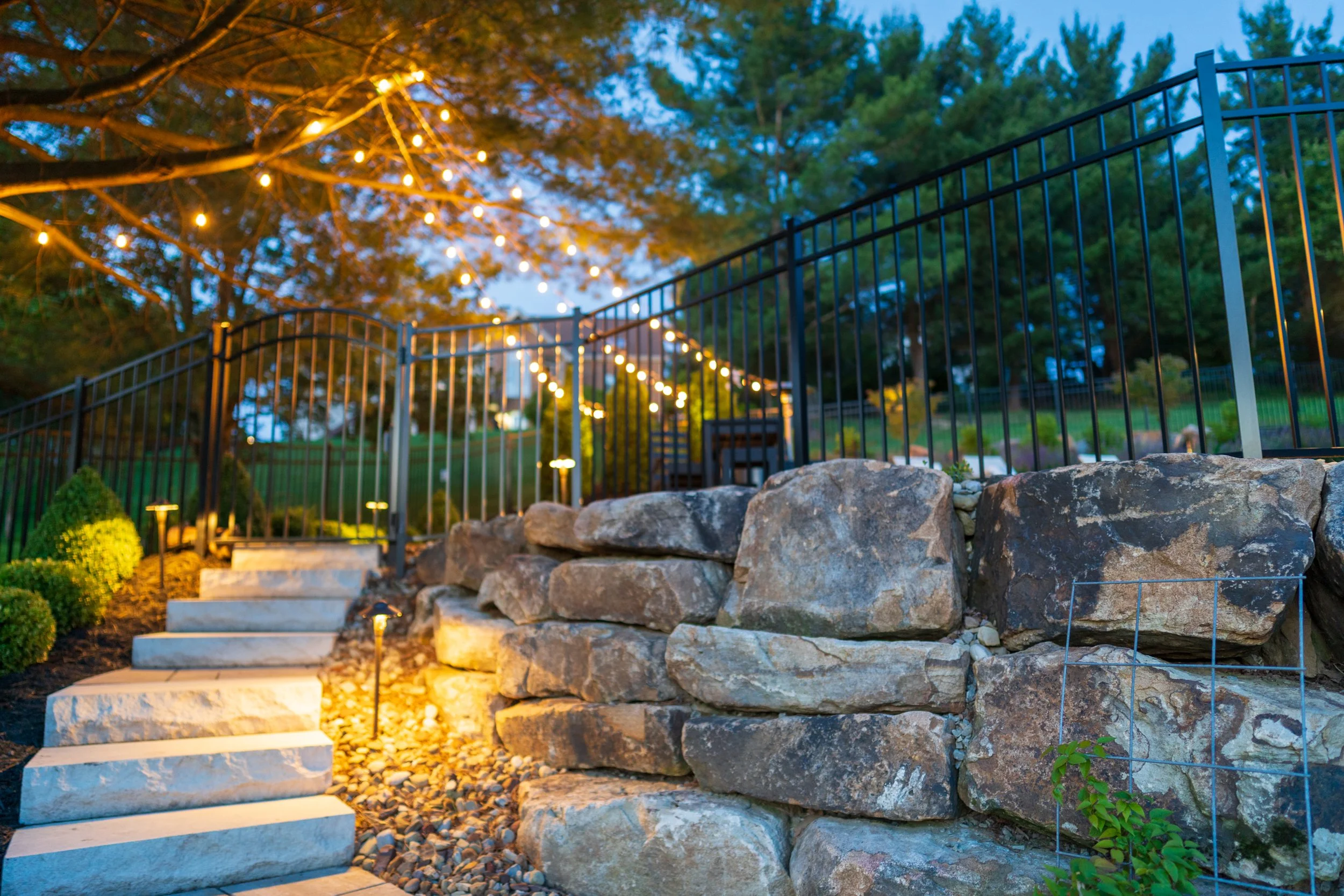
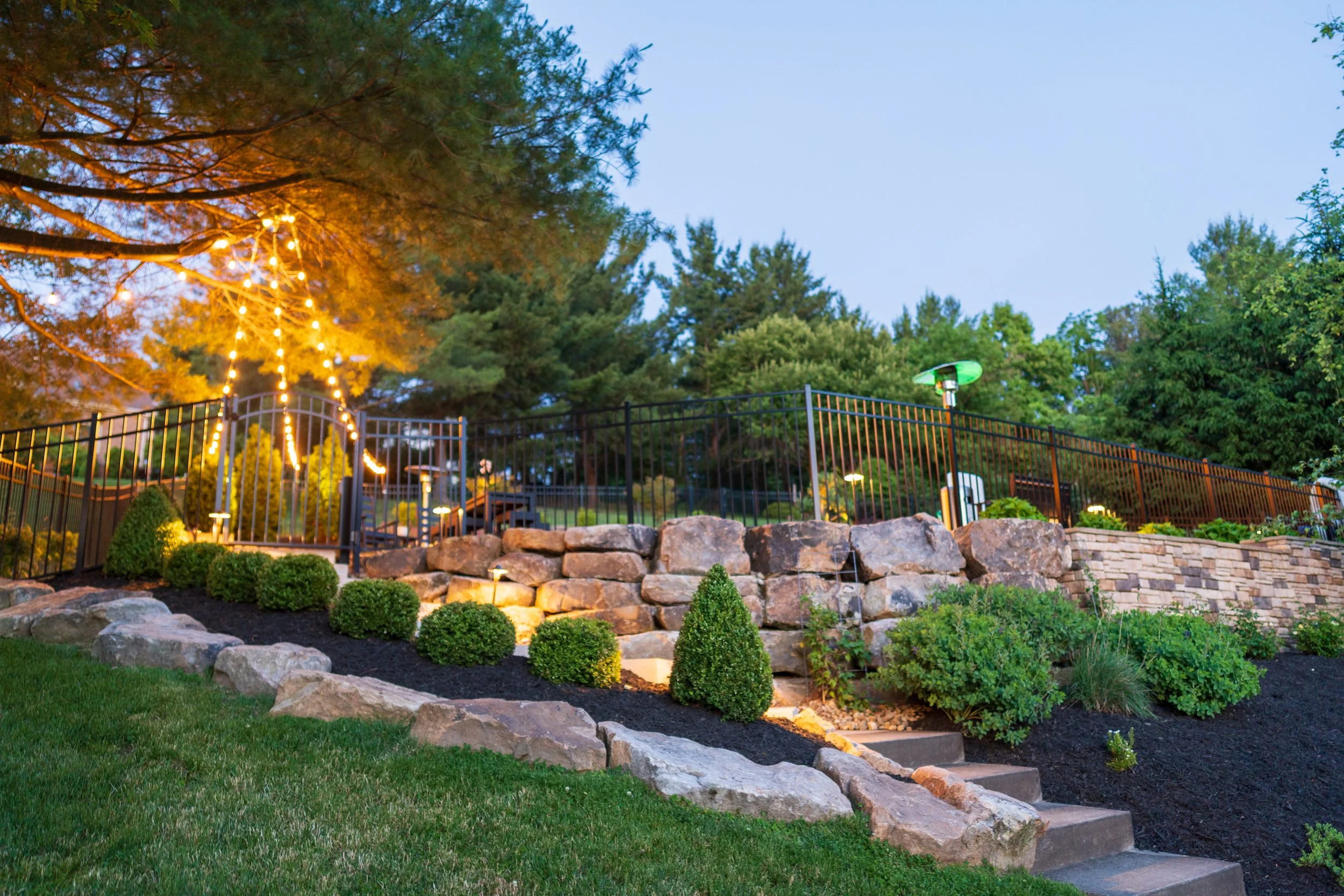
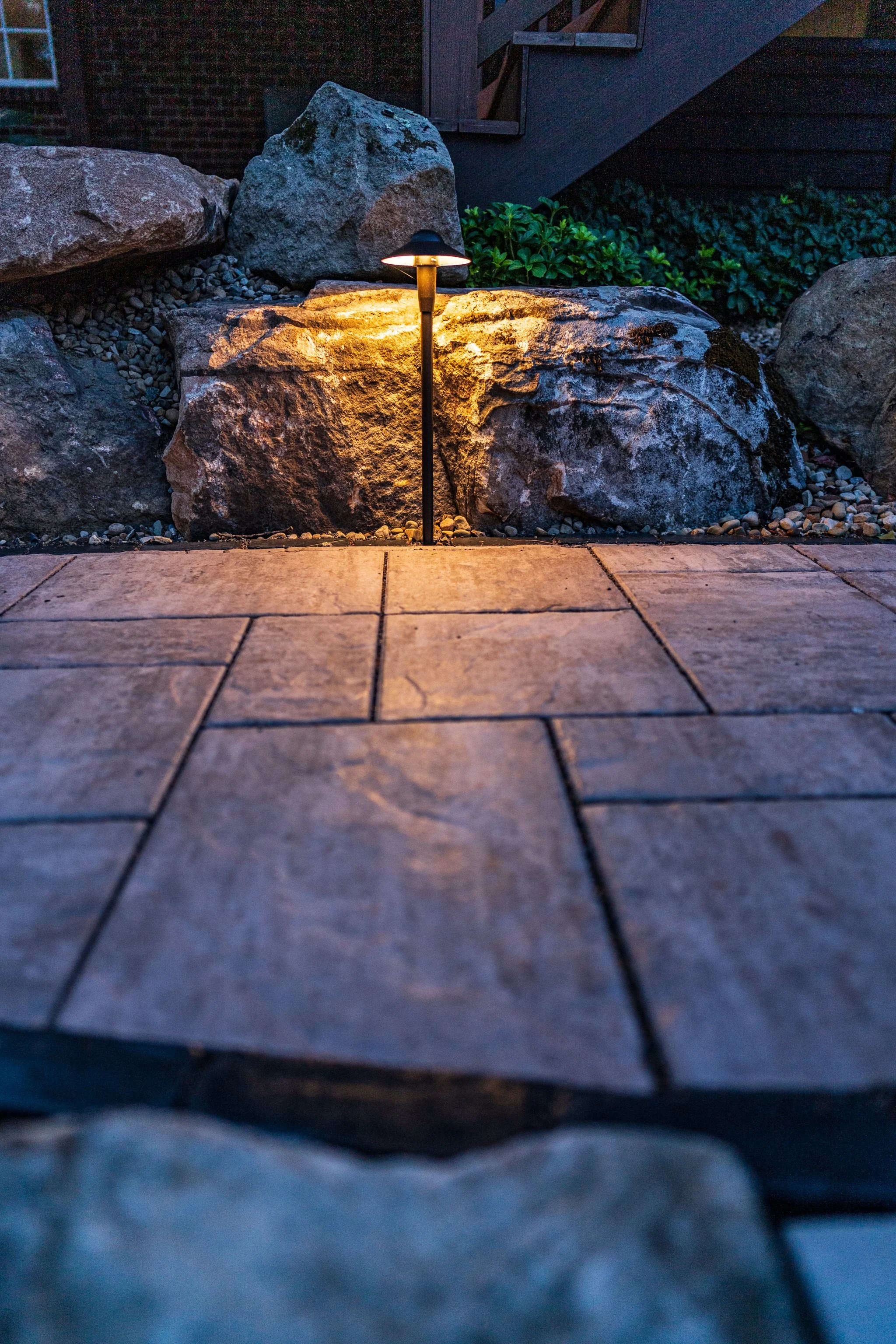
Lighting is not an accessory you add at the end. Accent lights, path lights, coping lights, transformers, several hundred feet of direct burial wire, and conduit sleeving all go in before the hardscape does.
We tie those schedules into the same Pentair panel that runs the pool, so the whole yard runs off one control.
The value here is simple math. Lighting roughly doubles the hours per year you actually use the space. It is also the single element that most reliably makes people stop and stare when they pull in the driveway at night.
Why "we’ll do the landscaping later" usually costs more
We hear this one a lot, and we understand the instinct. The budget is what it is.
But the sequencing works against you. Grading, sleeving, drainage, base prep, and lighting wire all have to be right before the patio goes down. Deferring those doesn’t save money; it schedules a demolition.
There is also the access problem. Once your patio, coping, fence, and pool are finished, getting an excavator and 60 tons of boulders into the backyard becomes an expensive logistics exercise. During the build, that equipment is already there.
What can be phased responsibly: plant material, upper terraces, secondary patios, outdoor kitchens, fire features. What cannot: anything under the hardscape. We will tell you honestly which is which.
The way we sequence it
Our project phases are built around this. Landscape does not get squeezed into whatever time and money is left at the end. Every contract includes a dedicated landscape walkthrough before installation begins, where we walk the finished hardscape with you and confirm the plan against the built space. Bed lines shift. Sightlines change once the patio is real. That walkthrough exists so the plan can catch up to the site.
Landscape installation, landscape lighting, fence, and rough grading are their own phase with their own payment milestone. It is the last phase because it has to be, not because it is the least important.
Frequently Asked Questions
-
Across our recent projects, it typically runs 40% to 50% of the total, and we have seen it exceed 60%. If you are budgeting a pool project and haven't allocated at least a third of the budget for everything around the pool, the budget isn't complete yet.
-
Square footage, mostly. A pool is a fixed vessel. A patio can be 1,300 to 1,900 square feet of engineered surface, plus coping, plus steps, plus retaining walls, plus the excavation, base, and drainage under it all. On one recent project, the patio, coping, and step package was about 35% more than the pool it surrounded.
-
No, and we will not build it that way. Every contract we write carries one. Water is the single most common cause of hardscape failure in this region, and remediating it after the fact means taking the patio back up. The drainage line item is the cheapest insurance in your contract.
-
Heavy equipment has to reach the work area, so lawn damage is expected and normal. We assess lawn repair near the end of the project rather than quoting it up front, because the actual extent depends on weather, access route, and scope changes along the way. We would rather price it honestly at the end than guess at the beginning.
-
Yes. Hardscape carries a two-year workmanship warranty, plus the manufacturer warranty on all hardscape products. Lighting workmanship is covered for one year, with manufacturer coverage on the fixtures. You also receive a landscape maintenance guide at project close so your plant material gets the right care through its establishment period.
-
Sooner than most people expect, and the timeline depends on what we planted. Structural evergreens like arborvitae and columnar spruce go in at 5 to 8 feet, so they start screening from day one. Specimen and ornamental trees are installed at 2 to 2.5-inch caliber or 6 to 8 feet, large enough to read as mature the first season. Shrubs and perennials take time. Most go in at 15 to 18 inches or in 3-gallon containers, and they are sized deliberately so they have room to grow into the bed instead of outgrowing it in two years.
The general rhythm looks like this. In year one, the plants are establishing roots, so you will see modest top growth and beds that still read as individual plants with mulch between them. Year two is when it starts to look like a landscape, with beds closing in and the layering doing its job. By year three, most clients stop seeing the plants as separate objects and start seeing the space.
If we planted beds that look a little sparse at handoff, that is on purpose. Beds crowded to look finished on day one are beds you'll thin or replace by year four.
Ready to see the whole picture?
If you are planning a pool, a pavilion, or an outdoor kitchen, come to the first conversation with the entire yard in mind, not just the centerpiece. That is how we design, and it is why our projects still look intentional a decade later.
Contact PSW to start your design conversation.